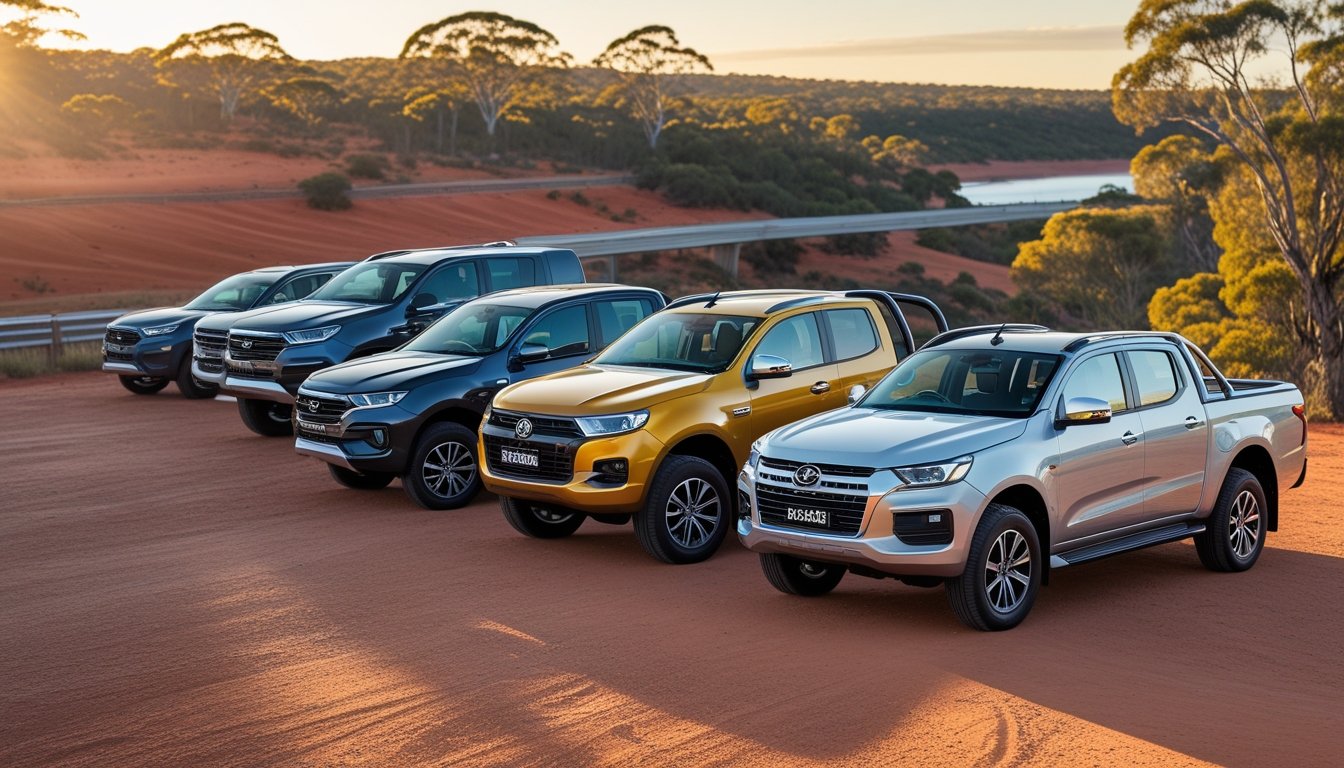
Australia’s ute market in 2026 focuses on strength, efficiency, and technology, with proven nameplates leading the field and new powertrains gaining ground. Buyers now weigh towing and payload against safety systems, connectivity, and lower running costs, making the choice more strategic than ever.
For 2026, the Ford Ranger and Toyota HiLux sit at the top of the Australian ute market, with the Isuzu D‑Max, Mazda BT‑50, and Nissan Navara close behind for value, reliability, and off‑road capability. Hybrid and electrified options begin to matter more this year, especially for fleets and urban use, while traditional diesel remains dominant for heavy work.
This guide breaks down the standout models and explains what separates them, before looking closely at the features and innovations shaping utes in 2026, from advanced driver assistance to improved efficiency and durability.
Top Ute Models in Australia for 2026
Australia’s 2026 ute market centers on proven reliability, rising value from newer brands, and stronger performance options across diesel, hybrid, and off-road-focused models. Buyers now weigh ownership costs, towing strength, and safety technology as closely as power and size.
Best Overall Utes
Several long-standing models continue to set the benchmark in 2026 due to balanced performance and strong resale value.
Ford Ranger remains a leader thanks to its wide model range, advanced driver-assist systems, and strong towing capacity of up to 3,500kg. Fleet buyers and private owners value its refined cabin and broad dealer support.
Toyota HiLux holds its position through durability and reliability rather than class-leading comfort. The latest updates improve safety tech and efficiency, which matters to buyers who keep vehicles long term.
Isuzu D‑Max stands out for mechanical simplicity and low running costs. Its diesel engine prioritizes longevity, and its standard safety features appeal to work-focused buyers.
| Model | Key Strength | Ideal For |
|---|---|---|
| Ford Ranger | Technology and versatility | Mixed work and family use |
| Toyota HiLux | Reliability and resale | Long-term ownership |
| Isuzu D‑Max | Low operating costs | Trade and fleet buyers |
Best Value Utes
Value-focused utes in 2026 offer strong equipment levels at lower entry prices without major compromises in capability.
GWM Cannon attracts buyers with aggressive pricing and a long warranty. Higher trims include features such as adaptive cruise control and leather interiors, which undercut established rivals.
Mitsubishi Triton continues to deliver solid value through competitive servicing costs and good off-road ability. The latest generation improves ride comfort and safety performance.
LDV T60 appeals to budget-conscious buyers who still need dual-cab practicality. While refinement trails premium rivals, it covers core requirements like towing and payload.
Shorter ownership cycles and capped-price servicing make these models appealing to cost-sensitive buyers.
Best Performance Utes
Performance-focused utes in 2026 emphasize power, stability under load, and off-road control.
Ford Ranger Raptor leads this group with a high-output engine, advanced suspension, and reinforced chassis. It targets buyers who prioritize off-road speed and handling over payload.
Toyota HiLux GR Sport focuses on improved suspension tuning and chassis strength. It suits drivers who want durability with a more planted feel on rough terrain.
Nissan Navara Warrior continues to offer factory-backed off-road upgrades, including increased ground clearance and all-terrain tires, without sacrificing warranty coverage.
These models trade some load capacity for control, strength, and driver confidence in demanding conditions.
Key Features and Innovations in 2026 Utes
Utes arriving in Australia for 2026 place clear emphasis on safer driving, lower fuel use, and smarter cabin technology. Manufacturers focus on electrified powertrains, stronger driver-assistance systems, and connected infotainment designed for work and family use.
Safety Advancements
Most 2026 utes lift their safety baseline to meet tougher buyer and fleet expectations. Advanced driver-assistance systems now appear as standard on more grades, not just flagships.
Common inclusions cover autonomous emergency braking with pedestrian and cyclist detection, lane-keep assist, and blind-spot monitoring with trailer coverage. Several models also add junction assist and adaptive cruise that works in stop-start traffic.
Towing safety receives more attention. Updated stability control systems detect trailer sway earlier and apply selective braking to maintain control. Some utes also offer surround-view cameras with dedicated tow modes, improving visibility when hitching or reversing with heavy loads.
Fuel Efficiency and Engine Options
Electrification defines the biggest mechanical shift for 2026. Traditional diesel remains important, but manufacturers now pair it with electric assistance to reduce fuel use and emissions.
Toyota introduces a 48-volt mild-hybrid HiLux in early 2026, while plug-in hybrid utes from brands like JAC expand choice for buyers seeking electric-only driving for short trips. Full battery-electric utes remain limited but continue development.
| Powertrain Type | Key Benefit | Typical Use Case |
|---|---|---|
| Turbo-diesel | High torque, long range | Heavy towing, remote travel |
| Mild-hybrid (48V) | Lower fuel use, smoother stop-start | Mixed urban and highway driving |
| Plug-in hybrid | Electric driving + backup engine | Daily commuting with load flexibility |
Technology and Connectivity
Cabin technology in 2026 utes feels closer to large SUVs than work vehicles. Larger central touchscreens, often 12 inches or more, replace older button-heavy layouts.
Wireless Apple CarPlay and Android Auto now appear across most ranges, supported by faster processors and clearer graphics. Digital instrument clusters become more common, displaying navigation, towing data, and off-road information in real time.
Manufacturers also improve software longevity. Over-the-air updates roll out navigation fixes and system improvements without dealer visits. USB-C ports, wireless charging pads, and integrated work apps support both professional and private use.