
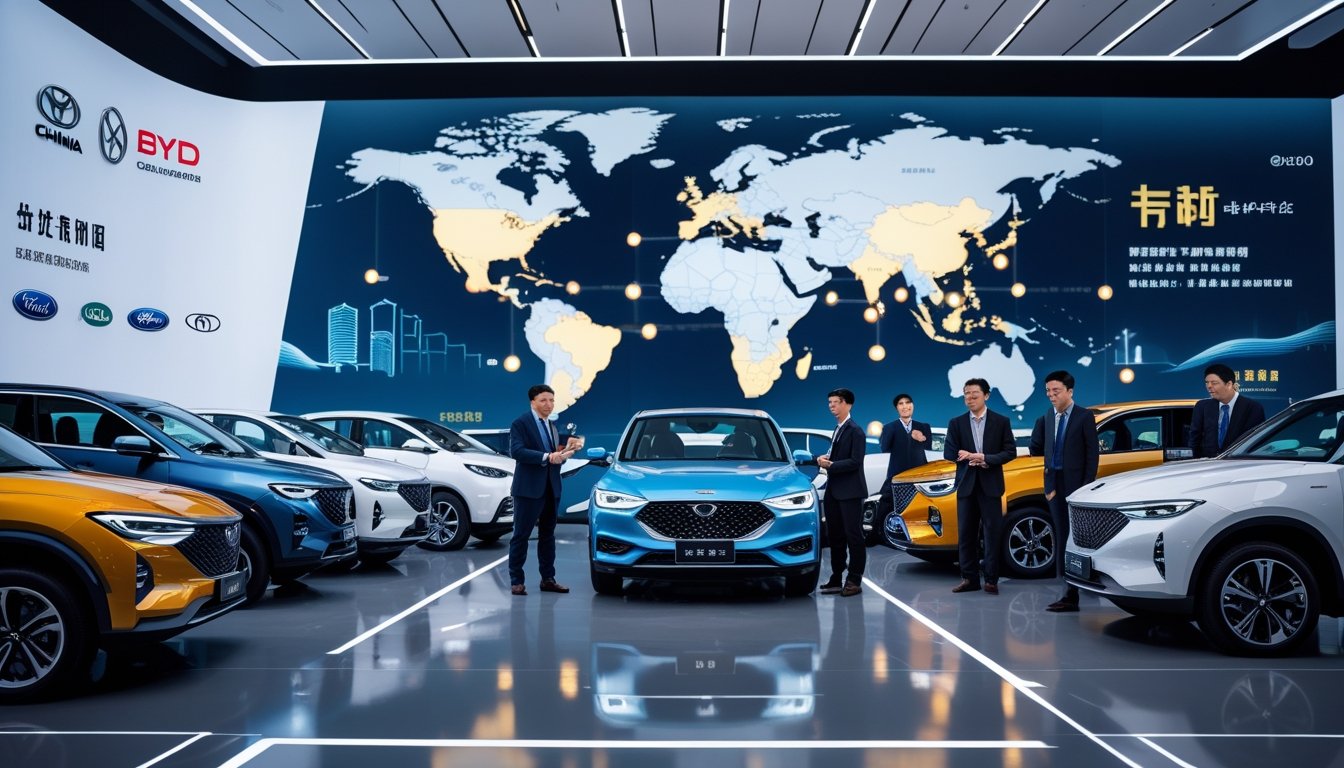

China’s car industry enters 2026 with momentum built on scale, speed, and technology. Chinese automakers expand beyond their home market while reshaping expectations around price, software, and electric performance.
China is set to strengthen its hold on the global car market in 2026 by pairing mass production with rapid advances in batteries, in‑car software, and assisted driving systems. Automakers from China no longer compete on cost alone; they now lead in charging speed, range, and integrated digital features that many rivals still treat as optional.
These shifts signal a market where global brands adapt to Chinese platforms, and new technology defines competitiveness more than legacy reputation. The changes ahead center on how dominance translates abroad and how 2026-era breakthroughs reset what modern cars deliver.
China’s Dominance in the Global Car Market
China leads global automotive growth through scale, electric vehicle leadership, and fast technology cycles. State support, export momentum, and control over key supply chains now shape how the industry operates worldwide.
Key Factors Behind China’s Automotive Rise
China built its automotive strength through sustained industrial policy, large domestic demand, and rapid EV adoption. Government incentives accelerated battery production, charging infrastructure, and software integration. Automakers used this scale to reduce costs and shorten development cycles.
Domestic competition also forced efficiency. Dozens of brands compete on price, range, and features, pushing fast iteration. Companies like BYD and Geely vertically integrate batteries, power electronics, and software.
Key structural advantages include:
- High-volume manufacturing that lowers unit costs
- Strong battery supply, including lithium iron phosphate chemistries
- Software-first vehicle design, especially in infotainment and driver assistance
These factors allow Chinese automakers to launch updated models faster than many Western peers.
Impact on International Competitors
Chinese automakers pressure established brands on price and technology, especially in electric segments. European, Japanese, and U.S. manufacturers now face thinner margins in entry-level and mid-range EVs. Some respond by delaying launches or narrowing model lineups.
Western brands also struggle to match feature density. Chinese EVs often include advanced driver assistance, large displays, and frequent over-the-air updates at lower prices. This shifts customer expectations across markets.
Several automakers adapt through partnerships or localized production in China. Others invest more heavily in software and battery development. The competitive gap no longer centers on brand strength alone but on speed, cost control, and integration.
Growth in Exported EVs
Chinese brands expanded exports rapidly as domestic competition intensified. Automakers target Europe, Southeast Asia, South America, and the Middle East with region-specific models. These vehicles compete directly with Tesla and legacy brands on range and pricing.
Recent industry data shows Chinese brands account for a large majority of global EV and plug-in hybrid sales. Export growth focuses on compact and mid-size EVs, where price sensitivity remains high.
Export strategy often includes:
- Knock-down assembly to avoid tariffs
- Local partnerships for distribution and service
- Flexible platforms that meet regional regulations
This approach allows fast market entry without heavy upfront investment.
Changes in Global Supply Chains
China’s dominance reshapes automotive supply chains, especially for batteries and electronics. The country controls much of the processing for lithium, cobalt, and rare earth elements. This gives Chinese suppliers pricing leverage and supply stability.
Automakers outside China now diversify sourcing to reduce risk. Many invest in local battery plants or seek alternative mineral suppliers. These shifts increase short-term costs and slow expansion plans.
At the same time, Chinese suppliers move overseas. Battery makers and component firms build factories in Europe and Asia to stay close to customers. Global supply chains become more regional but still depend heavily on Chinese technology and expertise.
Tech Breakthroughs Reshaping the Industry in 2026
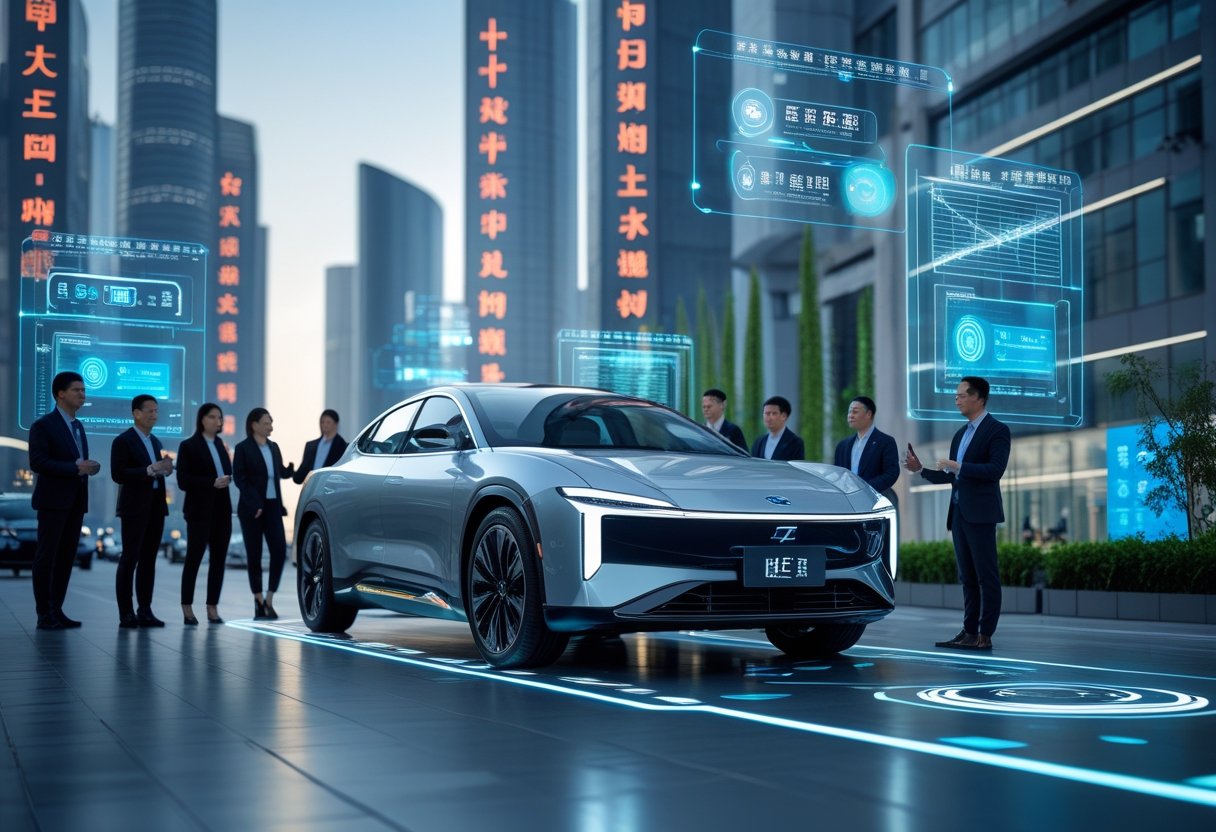
Chinese automakers enter 2026 with coordinated advances across batteries, autonomy, software, and manufacturing. These shifts lower costs, raise performance, and tighten integration between vehicles, infrastructure, and digital services.
Next-Generation Electric Vehicle Technologies
Battery innovation anchors China’s car market push. Automakers deploy high-silicon anodes, LMFP, and early solid-state hybrids to raise energy density while improving safety. Several mass-market models target 700–900 km rated range with faster charging.
Charging systems standardize around 800V platforms, cutting peak charge times to 10–15 minutes for highway stops. Battery packs adopt cell-to-pack and cell-to-body designs, reducing weight and parts count.
Key priorities in 2026 include:
- Lower cost per kWh through domestic materials and scaled production.
- Thermal stability for dense urban use.
- Recycling loops that recover lithium, nickel, and iron at industrial scale.
Advancements in Autonomous Driving
Chinese brands expand advanced driver assistance into wider price bands. Systems focus on urban navigation, highway pilot, and automated parking, supported by camera-first stacks paired with radar and selective lidar.
AI training relies on large-scale simulation and fleet data, accelerating updates through over-the-air releases. Automakers emphasize reliability in dense traffic and complex intersections rather than full autonomy claims.
Capabilities commonly shipping in 2026:
- Point-to-point urban NOA in mapped cities.
- Hands-off highway driving under defined conditions.
- Predictive safety using real-time traffic and weather inputs.
Regulators favor gradual expansion with clear driver responsibility, shaping conservative but deployable systems.
Integration of Smart Connectivity Features
Vehicles operate as nodes in a broader digital ecosystem. Chinese platforms integrate voice-first assistants, app ecosystems, and cross-device continuity with phones and home systems.
Cockpits move toward centralized compute, enabling smoother interfaces and faster updates. Connectivity supports V2X functions in pilot cities, improving signal timing, hazard alerts, and congestion routing.
Common features include:
- Unified operating systems across models.
- Subscription software for navigation, ADAS, and entertainment.
- Local AI processing to reduce latency and protect data.
This integration supports rapid feature rollout without hardware refreshes.
Sustainable Manufacturing Innovations
Manufacturing shifts focus from volume to efficiency and emissions control. Factories adopt AI-driven quality inspection, digital twins, and energy-aware scheduling to cut waste and downtime.
Materials strategies prioritize low-carbon aluminum, recycled steel, and bio-based interiors. Battery plants close the loop with on-site recycling and water reuse.
Notable practices in 2026:
- Zero-waste assembly lines for select models.
- Renewable-powered gigafactories.
- Lifecycle tracking from sourcing to end-of-life.
These changes reduce costs while aligning production with tightening environmental standards.