
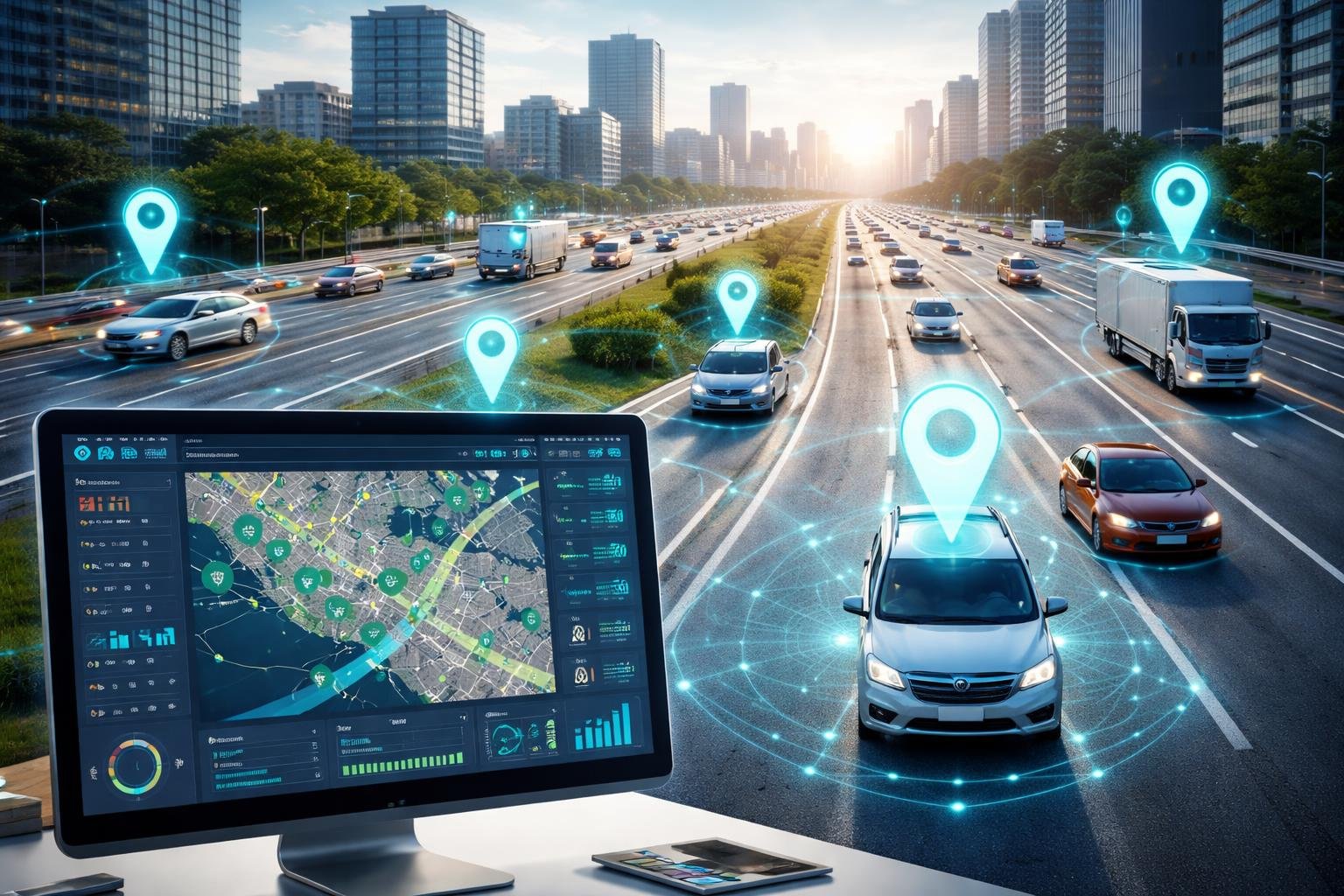

Choosing between real-time and passive vehicle tracking often depends on how much visibility and control someone needs over their vehicles. Real-time tracking offers instant location updates and alerts, making it ideal for those who want constant oversight and quick response capability. Passive tracking, on the other hand, stores trip data for later review, which suits users focused on efficiency insights rather than live monitoring.
Both systems serve the same goal—enhancing security and managing vehicle use—but they differ in how that information is delivered and applied. Understanding how data transmission, cost, and power requirements vary between them can clarify which option aligns best with specific operational or personal needs.
This discussion takes a closer look at the fundamental differences between real-time and passive tracking and provides guidance on selecting the most effective solution for reliable, cost‑efficient vehicle management.
Core Differences Between Real-Time and Passive Vehicle Tracking
Real-time and passive vehicle tracking differ mainly in how, when, and how often data reaches the user. Both systems rely on GPS satellites to collect accurate location data, but their methods of data transmission, storage, and power use define their practicality for fleet management, personal safety, and asset tracking.
How Real-Time Vehicle Tracking Works
Real-time tracking—sometimes called active GPS tracking—sends location data continuously through a cellular or satellite connection. Each GPS tracker calculates coordinates from multiple satellites, then transmits those updates to a cloud platform or mobile app. This allows real-time monitoring of vehicle movement, including speed, direction, and stop duration.
Update frequency often ranges from every few seconds to a few minutes, depending on configuration. Shorter intervals give greater visibility but consume more bandwidth and battery power. Plug-in units, such as OBD-II trackers, avoid this issue by drawing power from the vehicle’s electrical system.
This type of tracking device suits operations that need instant alerts for theft, route deviations, or unauthorized vehicle use. Many devices feature geo-fencing, sending notifications when a car exits a defined area. Because they use constant data transmission, real-time GPS trackers generally involve monthly subscription fees to cover network access.
How Passive Vehicle Tracking Works
Passive tracking, sometimes referred to as passive GPS tracking, stores location data locally on the tracking device instead of transmitting it live. The unit continuously logs travel history—coordinates, speed, and time stamps—into onboard storage or memory. Users retrieve the data later by connecting the device to a computer or syncing with an app.
Since passive trackers avoid constant communication with cellular or satellite networks, they consume less energy and often deliver extended battery life, lasting up to several weeks on a single charge. They require no subscription, making them cost-effective for long-term route verification, mileage reports, or regulatory documentation.
This setup benefits users who prioritize complete, reliable trip data over immediate updates. It also ensures data integrity even in areas with poor signal coverage where real-time tracking might drop updates or lose connection temporarily.
Comparison of Data Delivery and Visibility
| Feature | Real-Time Tracking | Passive Tracking |
|---|---|---|
| Data Transmission | Continuous via cellular/satellite | Logged locally, uploaded post-trip |
| Update Frequency | Every few seconds to minutes | After journey completion |
| Battery Life | Shorter (2–5 days typical) | Longer (1–3 weeks typical) |
| Visibility | Live map, instant alerts | Historical route data |
| Cost | Hardware + monthly fee | One-time purchase |
Real-time GPS tracking excels in real-time visibility and rapid response. Passive tracking focuses on complete data reliability and low maintenance. Some modern hybrid GPS tracking systems combine both, switching between live transmission and local logging to maintain continuous records without sacrificing efficiency.
Selecting the Best Tracking Solution for Your Needs
The right vehicle tracking method depends on operational goals, cost structure, and the conditions in which a business or individual operates. Evaluating the balance between functionality, technical reliability, and long-term expenses ensures the system delivers consistent value and useful data insights.
Cost Implications and Budget Considerations
Initial hardware costs and ongoing subscription fees vary widely across GPS tracking systems. Active or real-time trackers usually carry higher monthly charges due to cellular connectivity and cloud data storage, whereas passive data loggers often involve a one-time purchase with minimal updates until the unit syncs data manually.
Budgeting should account for the scale of deployment. A large fleet may benefit from volume-based discounts, while smaller operations might prefer devices that offer essential vehicle monitoring without advanced analytics. Hidden costs such as SIM cards, installation, or integration with dispatch software can affect total ownership costs.
| Expense Category | Real-Time Tracking | Passive Tracking |
|---|---|---|
| Hardware Cost | Moderate–High | Low–Moderate |
| Monthly Subscription | Required | Optional |
| Data Transfer | Continuous | Manual Sync |
| Maintenance | Periodic Firmware Updates | Minimal |
Organizations should calculate the return on investment through fuel savings, reduced downtime, and improved safety rather than price alone.
Use Cases: Fleet Management, Asset Tracking, and Theft Prevention
In fleet management, real-time tracking improves route optimization, driver accountability, and geofencing control. Active trackers allow managers to view live movement and respond quickly to schedule changes or traffic issues.
Asset management often relies on mixed systems. Stationary or slow-moving equipment can use passive trackers that record positional data intermittently, while mobile assets require continuous position feedback. Selecting the correct data frequency ensures reliable reporting without generating unnecessary network costs.
For theft prevention, devices offering instant alerts or trigger-based notifications enhance response time. Some units employ satellite communication to maintain visibility even when vehicles operate outside cellular coverage. Tamper alerts, motion detection, and backup battery systems provide an additional security layer, making these trackers suitable for remote or high-value assets.
Technology Factors: Battery Life, Coverage Area, and Alerts
Battery capacity strongly influences operational life. Systems with constant updates generally shorten power cycles, while data loggers and passive trackers conserve energy by recording information internally until upload. Solar-assisted or hardwired trackers reduce battery dependency for long-term use.
Coverage area determines network reliability. Operations extending into rural or offshore zones may need hybrid designs that switch between cellular and satellite communication. Urban fleets typically rely on dense network coverage for consistency and stronger data links.
Effective alert systems distinguish premium vehicle tracking models. Instant alerts—triggered by speeding, harsh braking, or geofence breaches—aid in prompt corrective actions. Customizable notification settings balance responsiveness with data volume, ensuring that monitoring teams receive relevant information without alert fatigue.