

Electric utes are transforming Australia’s automotive landscape, with major manufacturers now delivering battery-powered workhorses that challenge traditional diesel dominance. The 2026 MG U9 EV arrives with a 430km range and 3500kg towing capacity, matching its diesel counterpart while offering significantly more range than rivals like the Toyota HiLux BEV. This shift comes as diesel ute sales decline and electric vehicles gain market share across the country.
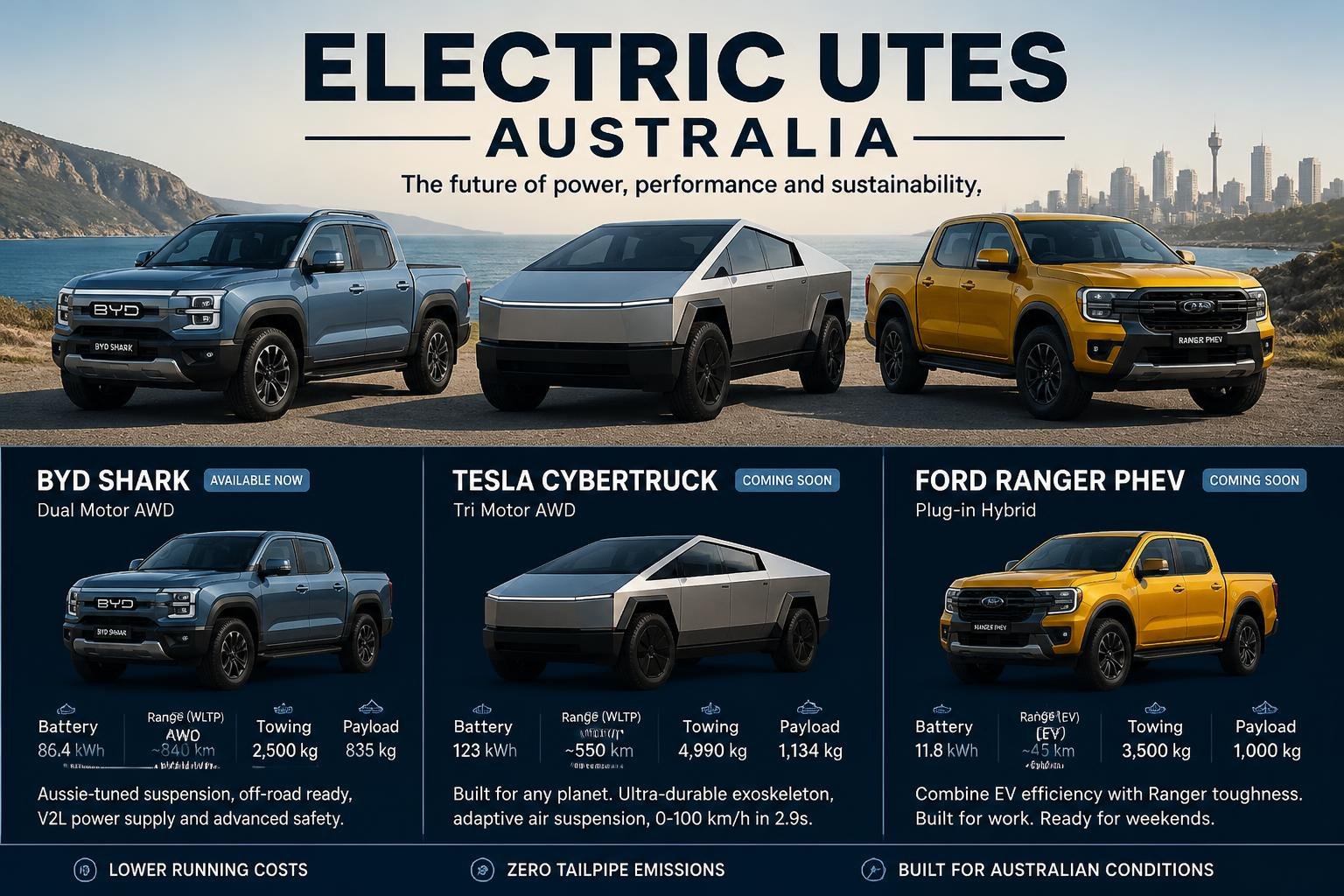
The electric ute segment is expanding rapidly, with models ranging from purpose-built workhorses to car-derived alternatives. These vehicles feature dual-motor configurations, substantial battery packs exceeding 100kWh, and towing capabilities that were once thought impossible for electric powertrains. However, real-world performance when loaded or towing reveals important limitations that buyers need to understand.
Market dynamics are shifting as manufacturers compete on range, towing capacity, and pricing in a segment traditionally dominated by internal combustion engines. Understanding the technology innovations, practical capabilities, and total ownership costs helps buyers determine whether electric utes meet their specific needs in 2026 and beyond.
Key Models and Technology Innovations in Electric Utes
Australia’s electric ute market is expanding with established automakers and new entrants introducing models that combine traditional utility with advanced EV technology. These vehicles feature improved battery systems, enhanced towing capabilities, and purpose-built platforms designed for work and recreation.
Latest and Upcoming Electric Ute Models
Several manufacturers have confirmed electric ute releases for the Australian market. The Toyota Hilux BEV represents a significant shift for one of Australia’s best-selling vehicles, transitioning the iconic nameplate to full electric power.
Chinese manufacturer BYD has entered the utility segment alongside its passenger vehicles like the BYD Atto 3, BYD Sealion, and BYD Sealion 7. Denza, a premium sub-brand, has also announced utility-focused electric vehicles targeting commercial and recreational users.
European and Asian brands are developing dedicated electric ute platforms rather than converting existing petrol models. Geely’s EX2 platform underpins several upcoming utility vehicles across multiple brands. BMW’s electric lineup, including the BMW iX3, demonstrates the technology that may extend to commercial variants.
Performance, Range, and Charging Capabilities
Modern electric utes achieve WLTP range figures between 350-500 kilometres depending on battery capacity and configuration. Dual-motor all-wheel-drive systems deliver instant torque, providing better acceleration than diesel equivalents.
Fast-charging capabilities allow 10-80% charges in 30-40 minutes using DC charging stations. Regenerative braking systems recover energy during deceleration, extending range and reducing brake wear. This technology, already proven in vehicles like the Tesla Model 3 and Tesla Model Y, adapts well to utility applications where frequent stopping occurs.
Battery warranties typically span 8 years or 160,000 kilometres. Most manufacturers use lithium iron phosphate (LFP) or nickel manganese cobalt (NMC) battery chemistry depending on the model’s intended use and price point.
Chassis, Towing, and Utility Features
Electric utes employ either adapted ladder-frame chassis or purpose-designed skateboard platforms. The ladder-frame chassis approach maintains compatibility with existing body styles and accessories while housing battery packs within the frame rails.
Towing capacities range from 1,500-3,500 kg across different models. The low centre of gravity from floor-mounted batteries improves stability when towing, though range decreases by 30-50% under maximum load.
Cargo bed dimensions match traditional utes, with some models offering front trunk storage (frunk) space. Integrated power outlets provide 240V AC power directly from the battery, eliminating the need for separate generators on work sites.
Buying Considerations and Market Outlook
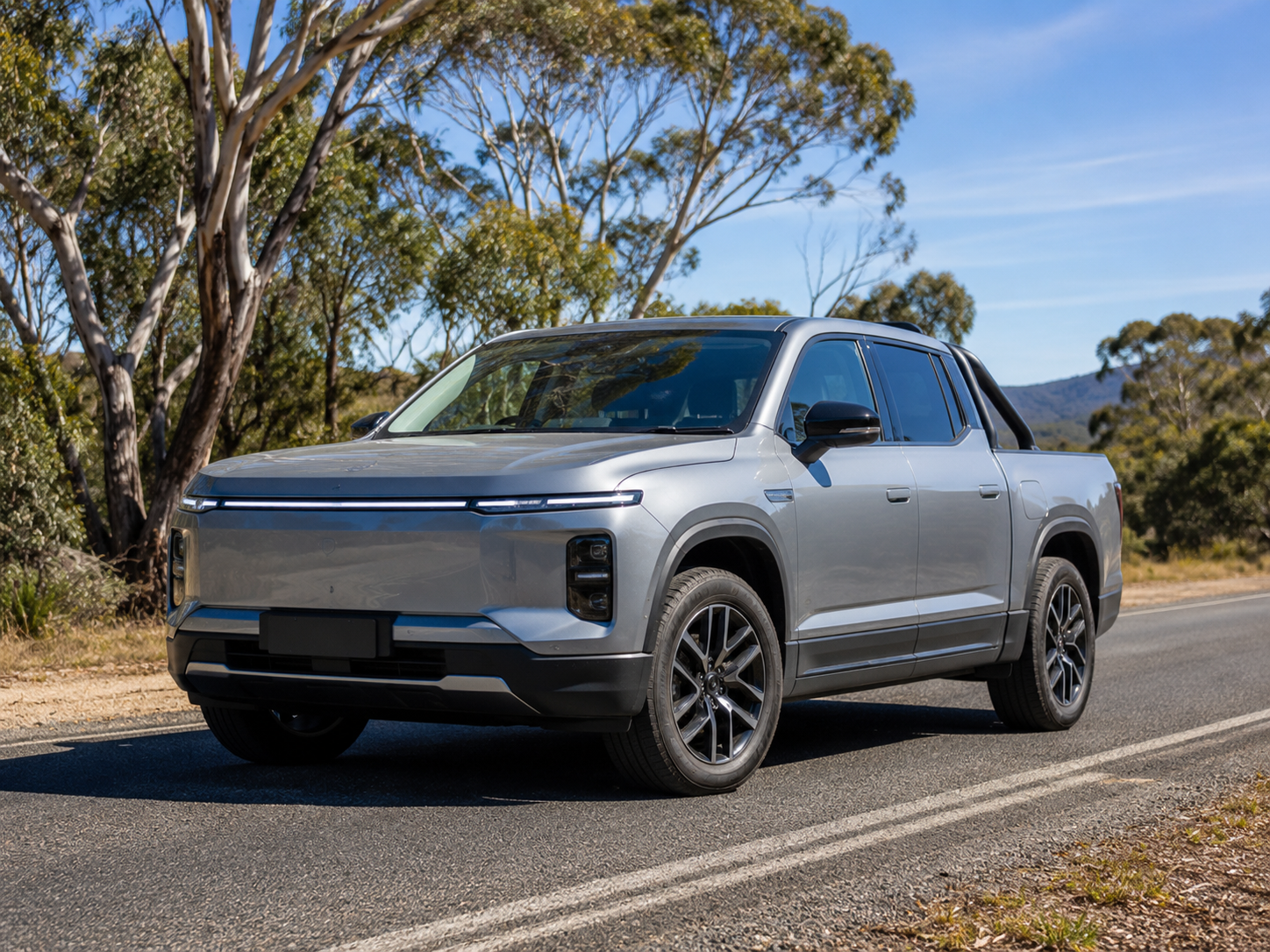
Electric utes face unique considerations around total ownership costs, charging practicality for trade and recreational use, and a rapidly evolving market with new brands entering Australia throughout 2026 and beyond.
Cost of Ownership and Running Costs
Electric utes typically carry higher purchase prices than diesel equivalents, though this gap continues to narrow as Chinese manufacturers increase competition. Running costs often favor electric models when charged at home on off-peak rates or solar power, with electricity generally costing less per kilometer than diesel fuel.
Maintenance expenses tend to be lower for electric utes. They require no oil changes, have fewer moving parts, and benefit from regenerative braking that reduces brake wear. Service intervals are often longer compared to diesel vehicles.
However, buyers need to account for potential home charging installation costs. A dedicated charging unit provides faster charging than standard power points. Insurance premiums may differ between electric and conventional utes, and resale values remain less predictable given the nascent market and rapid model updates.
Charging Infrastructure and Practicality
Charging infrastructure remains a critical consideration for ute buyers who frequently travel to remote locations or tow heavy loads. While urban and highway charging networks have expanded significantly, coverage in rural and regional areas still lags behind metropolitan zones.
Home charging suits tradies and operators with predictable daily routes who can recharge overnight. Public fast charging allows longer journeys but requires route planning, particularly when towing, as trailers cannot always fit in charging bay configurations. Range decreases substantially when hauling heavy loads or towing at capacity.
For buyers without off-street parking, kerbside charging options remain limited outside select metropolitan areas. This makes electric utes less practical for apartment dwellers or those relying exclusively on public charging.
Market Trends and Emerging Brands
Australia’s best-selling electric vehicles as of April 2026 include the Tesla Model Y, BYD Sealion 7, and Tesla Model 3, though these are SUVs rather than utes. The electric ute segment remains small but growing.
Chinese brands dominate market expansion, with BYD leading volume sales across multiple segments including the BYD Atto 1 and other Atto variants. Premium manufacturers like BMW with the iX3, Polestar, and luxury brand Denza are also expanding their electric lineups. Traditional ute manufacturers are expected to release electric variants of popular models, while new brands like Chery plan ute arrivals in late 2026.
WLTP range claims often exceed real-world performance, particularly under load. Buyers should research actual tested figures rather than relying on manufacturer specifications alone.