
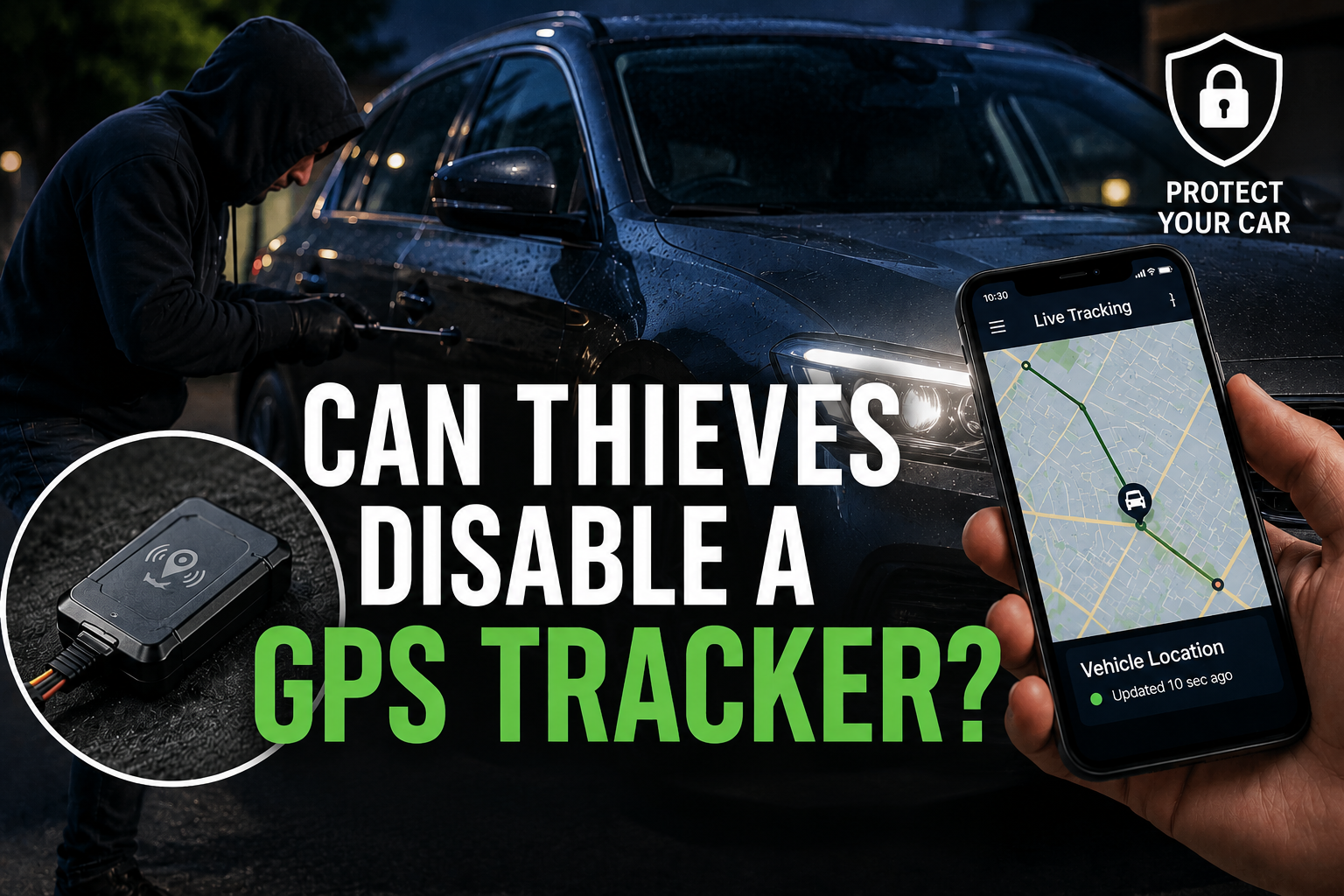

Car theft in Australia is not slowing down, and thieves are finding new ways around the security features drivers rely on. GPS trackers are marketed as a strong line of defence, but many owners assume they are foolproof once installed. That assumption can be costly.
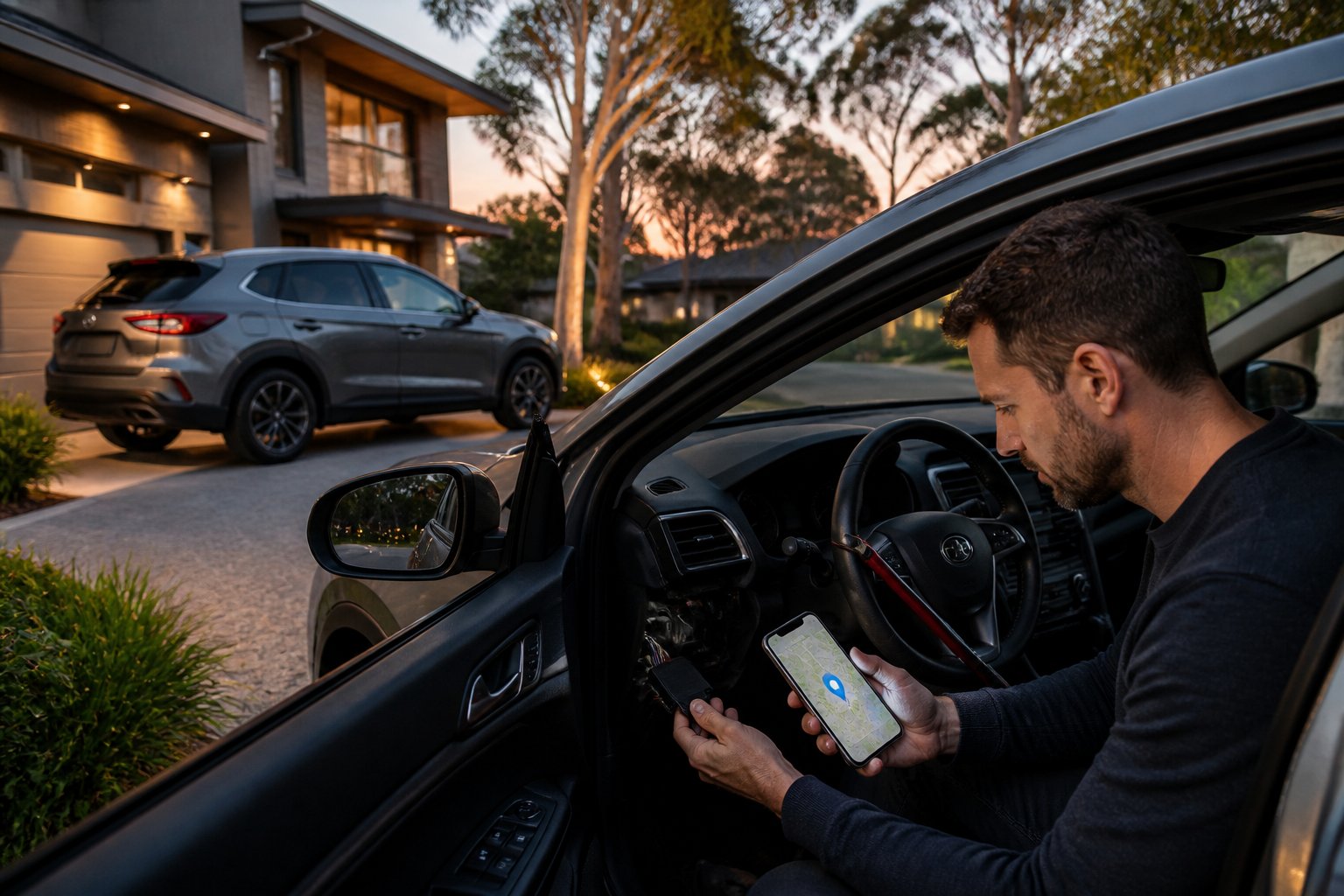
Yes, thieves can disable a GPS tracker, but doing so requires specific knowledge, tools, or physical access that most opportunistic criminals do not have. Methods range from disconnecting the vehicle’s battery to using signal jammers or locating the device itself if it has been poorly hidden. The level of risk depends heavily on where the tracker is placed, how it is powered, and whether it includes tamper alerts.
Understanding these vulnerabilities is the key to closing them. This article explains how thieves attempt to disable trackers, which methods are most common in Australia, and what steps owners can take to make their vehicles a much harder target.
How GPS Trackers Can Be Defeated
Thieves rely on three main tactics to defeat GPS trackers: physically removing the device, blocking its signal, or cutting off its power supply. Each method carries different levels of difficulty, cost, and legal risk.
Common Physical Removal Methods
Magnetic GPS trackers are the easiest to defeat. If a thief locates the device, it can be pulled off in seconds without tools.
Hardwired trackers pose a bigger challenge. These units connect directly into a vehicle’s electrical system and are often hidden in the dashboard, under seats, or near the OBD-II port.
Thieves who specialise in vehicle theft check known hiding spots first, including wheel wells, bumpers, and the engine bay. A careful search of these areas can take only a few minutes for someone experienced with a particular make or model.
Trackers wired directly into the vehicle’s fuse box or wiring harness take longer to find and remove. This delay works in the owner’s favour, since it increases the chance of recovery before the vehicle reaches a chop shop.
Signal Jamming And Its Legal Risks
GPS jammers block satellite signals by flooding the same frequency with noise, preventing the tracker from calculating its position. These devices are small, inexpensive, and available online, though their use is illegal in Australia.
Under the Radiocommunications Act 1992, operating a jamming device without authorisation can result in significant fines. The Australian Communications and Media Authority (ACMA) actively monitors and penalises this activity.
Jammers also interfere with other signals nearby, including mobile phones and emergency services equipment. This creates risks beyond the immediate theft, since jamming can disrupt communications for anyone in range.
Because of these legal consequences, jamming is less common among opportunistic thieves and more often associated with organised theft operations.
Power And Connectivity Vulnerabilities
Most GPS trackers depend on a constant power source, either the vehicle’s battery or an internal battery pack. Disconnecting the battery or cutting the wiring feeding the tracker stops it from transmitting data.
Cellular-based trackers also rely on network connectivity to send location updates. Placing a vehicle in an area with no signal, such as an underground car park or a shielded shipping container, can prevent the device from reporting its position.
Some trackers include backup batteries that continue operating for a limited time after main power is lost. This buffer gives owners and recovery services a short window to act before the signal disappears entirely.
Layered Vehicle Security For Australian Drivers
No single device stops every theft method used against modern vehicles. Effective protection combines a hidden tracker with backup power, active monitoring tools, and physical deterrents that work together rather than in isolation.
Choosing A Concealed Tracker With Backup Power
A tracker’s placement matters as much as its features. Devices wired into the main harness and hidden away from the OBD port, fuse box, or dashboard are harder for thieves to locate and remove.
Backup battery power is a critical requirement, not an optional extra. Thieves who successfully identify a tracker typically cut its main power source first, which disables any device relying solely on the vehicle’s electrical system.
Key features to look for include:
- Independent battery backup lasting several hours to days
- Motion-triggered activation that switches to battery power automatically
- Tamper alerts sent to the owner’s phone when power is cut
- Compact sizing that fits in multiple concealment points, not just one predictable spot
Using Alerts, Geofences, And Recovery Features
Real-time alerts turn a tracker from a passive recovery tool into an early warning system. Notifications for unauthorised movement, ignition starts, or towing attempts allow drivers to react within minutes rather than discovering the theft hours later.
Geofencing adds another layer by defining set boundaries around a home, workplace, or regular parking area. If the vehicle crosses that boundary without authorisation, the system sends an immediate alert.
This is particularly useful overnight or during work hours when a car sits unattended for long stretches. Combined with location history and speed data, geofencing helps drivers and police act quickly once a vehicle leaves its expected zone, rather than relying on guesswork.
Combining Tracking With Physical Anti-Theft Measures
Tracking data helps recover a stolen vehicle, but physical deterrents make theft harder in the first place. A steering wheel lock, gear stick lock, or wheel clamp adds time and visible risk for a thief, which discourages opportunistic attempts.
CAN bus and OBD port protection devices block the injection methods increasingly used to bypass factory immobilisers. These physical barriers work alongside software-based alerts rather than replacing them.
A practical layered setup includes:
| Layer | Function |
|---|---|
| Hidden GPS tracker | Location tracking and recovery |
| OBD port lock | Blocks key cloning and CAN injection |
| Steering wheel lock | Visible, physical deterrent |
| Alarm/immobiliser | Prevents unauthorised ignition |
Each layer addresses a different stage of an attempted theft, from deterrence through to recovery.